ISA Certified Arborists Specializing In Tree Removal Tree Pruning Plant Health Care Stump Grinding Arborist Consultation Cabling and Bracing Tree Risk Assessment Storm Damage
Plant Health Care In Flagstaff
Healthier Trees, Thriving Landscapes.
How Coconino’s Cinder Soil Creates Nutrient Deficiency That Regular Watering Can’t Fix
Flagstaff’s Soil and High Elevation Work Against Your Trees
On the edge of Coconino National Forest, Plant Health Care in Flagstaff looks nothing like tree care anywhere else in Arizona. The volcanic cinder soil left behind by the San Francisco Peaks eruptions drains too fast, holds almost no soil organic matter, and leaves landscape trees perpetually hungry regardless of how much you water.
If your ponderosa pine or aspen looks faded, drops needles early, or simply refuses to thrive, poor soil chemistry is often the real culprit. Soil testing reveals what is actually missing beneath the surface, and without that baseline, you are guessing. Generic fertilizer from a hardware store does not address the specific nutrient deficiency patterns common in Flagstaff’s cinder-based ground.
Deep root fertilization bypasses that compacted, nutrient-poor top layer entirely, delivering soil amendments and nutrients directly into the active root zone where trees can actually use them. Combined with targeted soil aeration, it gives struggling trees a genuine path to recovery rather than temporary relief.
Flagstaff’s short growing season compounds the problem. Trees here have a narrow window to build the energy reserves they need to handle drought stress and environmental stress through the rest of the year. A proactive tree and shrub care program built around real soil data gives your trees that window back.
Ask Us About Tree Services In Flagstaff
Early Intervention Is What Separates a Recoverable Tree From an Emergency Removal
A Stressed Ponderosa Pine Won’t Wait. What Happens When Bark Beetle Pressure Goes Unaddressed
Bark beetle populations move out of Coconino National Forest into residential neighborhoods regularly, and a pine already dealing with drought stress or declining tree health is exactly the target they find first. By the time you notice pitch tubes on the bark or fading needles, the infestation is often well established.
That delay is where the real cost starts. A tree that could have been protected through routine pest monitoring and a structured Plant Health Care program becomes a candidate for emergency removal instead. Emergency removals on mature trees don’t come cheap, and a dead tree near a structure adds liability on top of the expense.
If you’ve walked through Buffalo Park and noticed the density of the ponderosa canopy right at the edge of the urban landscape, you already understand how little distance separates your yard from that pressure. Insect Infestation doesn’t announce itself early.
Integrated pest management addresses this before it compounds. Combining insect and disease control, early intervention treatments, and disease prevention into a consistent plan protects tree health without waiting for visible damage to force your hand. A proactive approach to tree care consistently costs less than reactive removal. Protecting a high-value tree through routine monitoring is the smarter financial decision, not just the ecologically responsible one.
What an ISA Certified Arborist Actually Does Differently on a Plant Health Assessment
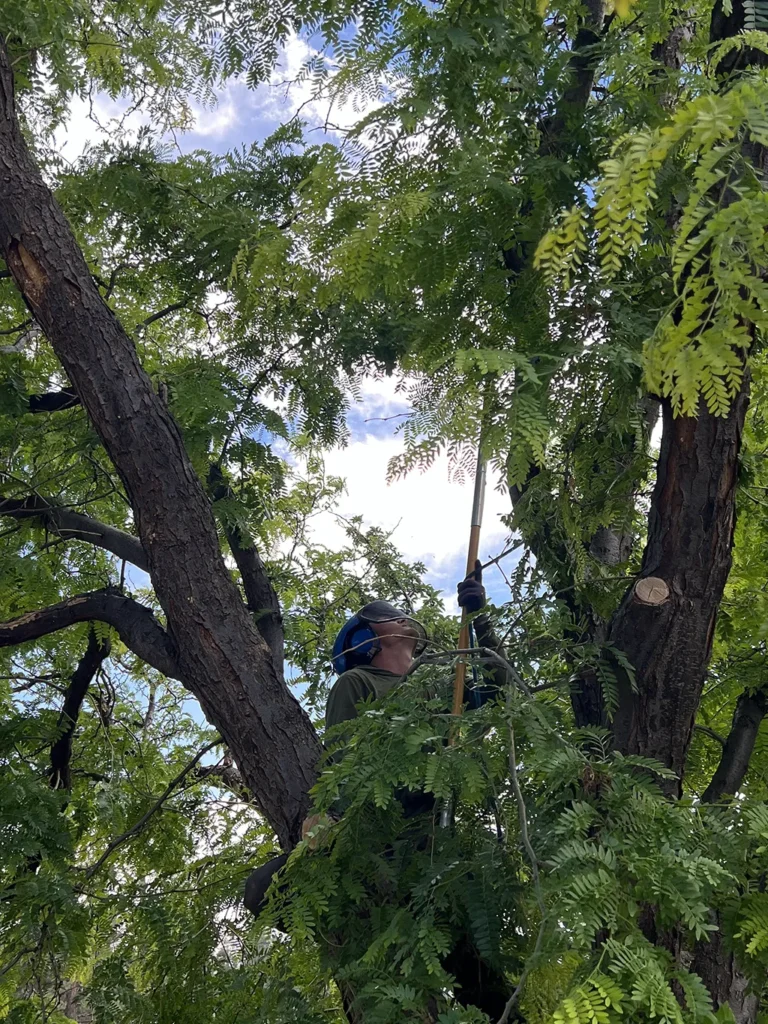
ISA Certified Arborist status isn’t a wall decoration. It means the person evaluating your trees has passed a rigorous examination in arboricultural science and is held to ongoing continuing education standards. For you, that translates directly into a plant health evaluation grounded in diagnostics rather than assumptions.
If you’ve had a landscaper glance at a struggling tree and recommend a generic spray, you already know the difference. A Plant Health Care Specialist first works through a structured plant disease diagnosis process. That means identifying whether your tree is dealing with a fungal pathogen, an insect infestation, a nutrient deficiency, or compounding environmental stress before anything is applied. The treatment follows the diagnosis, not the other way around.
A targeted spray program built on that diagnosis is more effective and avoids unnecessary chemical applications. Depending on the assessment, treatment might involve a trunk injection, a foliar spray, a soil drench, or a fungicide treatment. Each method reaches the tree differently, and choosing the wrong one wastes your money.
From Soil Aeration and Deep Root Watering to Routine Monitoring. Here Is What the Process Looks Like
What a Plant Health Care Program Includes From the First Visit to Ongoing Monitoring
Every engagement starts with a site walk. Before any treatment is recommended, you get a thorough plant health assessment that looks at soil conditions, root zone health, drainage, and visible stress indicators across your trees and shrubs.
Soil management comes first, and for good reason. Urban trees along the historic Route 66 corridor deal with severe compaction and degraded soil biology from decades of foot traffic and development. Soil aeration breaks up compaction, and deep-root fertilization delivers nutrients directly into the root zone, where compacted ground would otherwise block them. Mulching follows to retain moisture and begin rebuilding soil organic matter over time.
If your trees need structural attention, pruning, cabling, and bracing are folded into the same plan rather than treated as separate events. Water management recommendations are also part of the process, covering deep root watering schedules suited to Flagstaff’s drought cycles. Trunk injection may be incorporated where foliar or soil drench applications are less effective.
Being family-owned shapes how this works in practice. You work with the same arborist across every visit, not a rotating crew. That continuity matters because a tree maintenance plan with routine monitoring only improves when the person returning to your property remembers what they saw six months ago. Diagnostic accuracy builds over time, and so does your tree’s recovery.
Tree Removal
Safe efficient removals
Tree Pruning
For beautiful, healthy trees
Plant Health Care
Keep your trees thriving
Stump Grinding
Stump grinding for a usable landscape
How to Know When Your Trees and Shrubs Need a Professional Health Evaluation Now
The Longer a Struggling Tree Goes Unassessed, the Fewer Options You Have
Picture this: a pine in your yard has been dropping needles earlier than usual for two growing cycles. You assumed it was just a dry year. Then a neighbor’s tree comes down, and suddenly yours looks a lot worse to the eye.
When landscape plants show early stress signals like discoloration, thinning crowns, or bark anomalies, tree fertilization and soil amendments can still make a real difference. Wait long enough, and structural decline sets in. At that point, tree preservation becomes much harder and removal becomes more likely.
If your trees and shrubs are showing any visible stress, a plant health assessment gives you a clear picture of what’s actually happening below the canopy. Urban trees growing in rocky volcanic soil near areas like NAU’s campus face compound pressures that don’t resolve on their own. Drought stress, nutrient deficiency, and soil compaction compound quietly.
Acting early protects tree vigor, supports relief from heat and drought stress, and keeps your landscape’s health intact without forcing expensive decisions later. Property value holds when your trees are visibly healthy and structurally sound.
Scheduling a plant health assessment with a certified arborist is the straightforward next step. Residential tree care works best when it’s proactive, not reactive, and the sooner you get a diagnosis, the more options you have.