ISA Certified Arborists Specializing In Tree Removal Tree Pruning Plant Health Care Stump Grinding Arborist Consultation Cabling and Bracing Tree Risk Assessment Storm Damage
Tree Removal In Flagstaff
Safe, Clean Tree Removal From Flagstaff's Favorite Family Team
Why High-Altitude Tree Conditions in Northern Arizona Demand a Different Removal Approach
Removing Large Ponderosas Near Homes Takes a Different Skill Set
Flagstaff’s neighborhoods grew up inside a ponderosa pine forest, which means many of the trees we remove are 60 to 100 feet tall. They often stand within striking distance of a roof, a deck, or a power line. We rarely have a clean drop zone.
Most of our removals are rigged and taken down in sections rather than felled, and an ISA Certified Arborist makes that call on site before a saw ever comes out.
Bark beetle pressure and years of drought stress accelerate that instability. Removal of a beetle-killed tree isn’t a straightforward cut-and-drop operation. The wood becomes brittle in unpredictable ways, and the lean of the tree can shift as you work through it.
Sunnyside is where the residential canopy combined with tighter lots creates genuine complexity. Trees have grown into fences, toward rooflines, and over utility easements over decades. A proper Tree Risk Assessment before any cut tells you exactly what you’re dealing with.
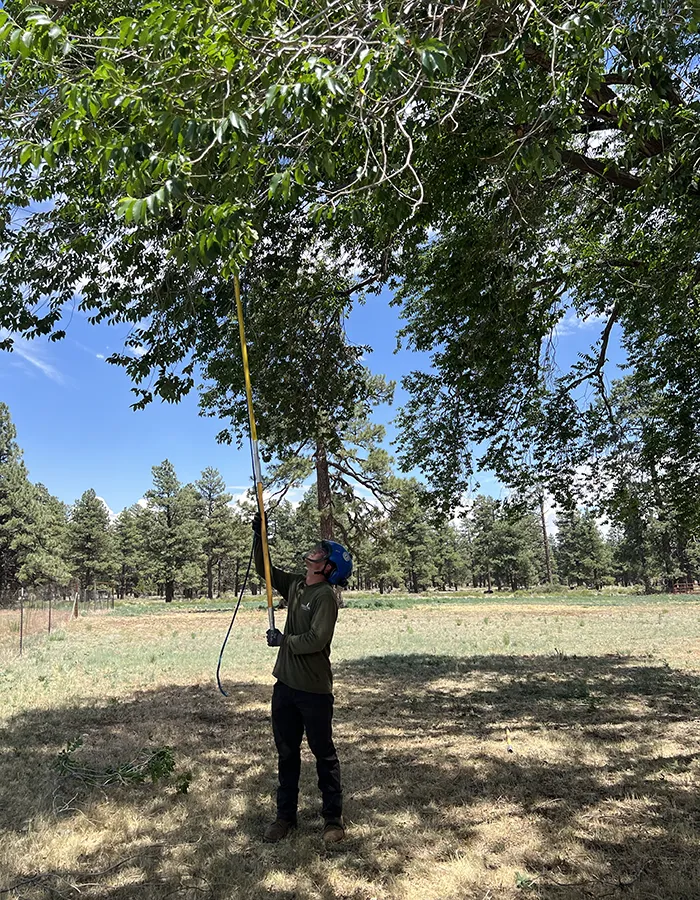
Ask Us About Our Tree Removal Services
How an Honest Removal Assessment Can Save You a Tree - and Unnecessary Expense
Don’t Assume a Leaning Tree Needs to Come Down. Often That’s Wrong
A leaning Ponderosa pine near your roofline looks like a removal job. Sometimes it is. But lean alone doesn’t determine that. Root plate stability, crown weight distribution, and the presence of disease do. Skipping that diagnosis and going straight to the chainsaw is how you lose a healthy tree you didn’t need to lose.
An ISA Certified Arborist evaluates a tree’s health before making any recommendations. Structural pruning can redistribute crown weight and reduce wind load. Crown thinning removes the leverage that makes a tree dangerous without removing the tree itself. If disease is present, tree disease treatment or targeted removal of diseased trees may address the problem at the source.
If you’ve already gotten a quote that went straight to full removal without any discussion of tree pruning or preservation options, that’s worth a second look. Not every crew separates a tree risk assessment from a sales call.
Honest scoping saves you money and sometimes saves the tree. That’s a concrete outcome worth asking for before any work begins.
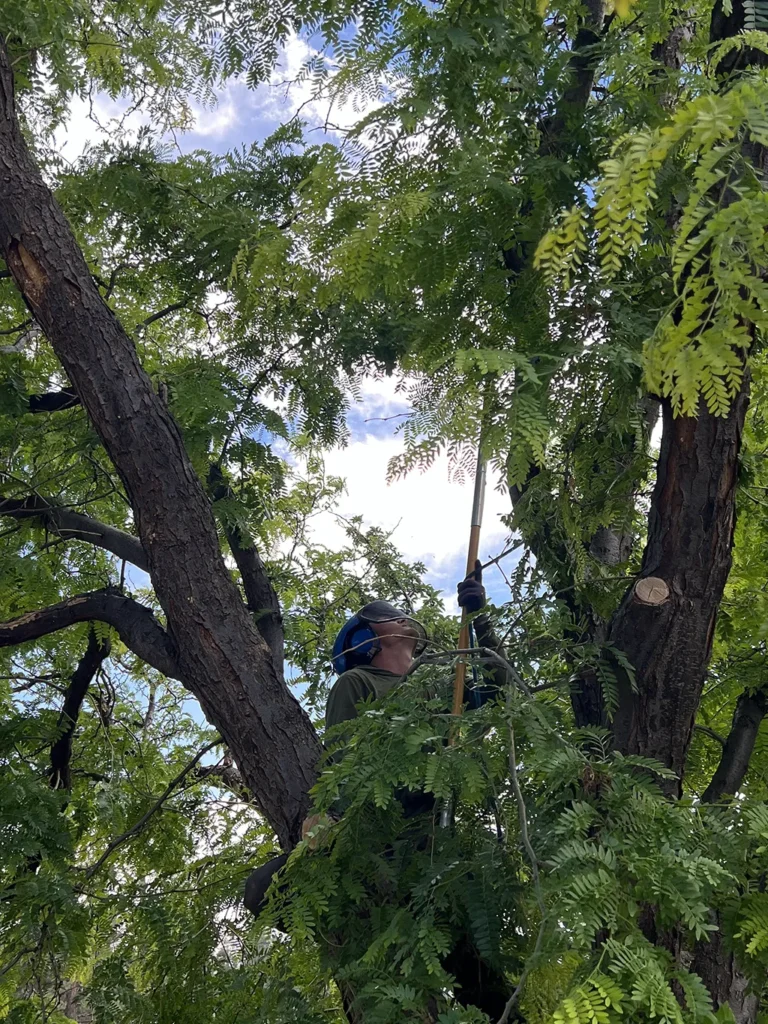
What Happens When Essential Tree Care Arrives on Your Property
Every job starts with an assessment and a free estimate, delivered in writing before any work begins. If you’ve never hired a tree service, that walkthrough matters. It’s where questions about what’s included, what gets hauled away, and what the stump situation looks like are all answered up front.
For trees near structures, the crew uses rigging and controlled sectional cuts rather than felling straight to the ground. Large trees near a roofline or fence require that kind of technical tree removal.
Once the tree is down, wood chipping handles brush and smaller limbs on site. Tree debris removal clears everything else. If you want the stump gone, stump grinding and stump removal can be handled on the same visit or scheduled immediately after.
If your insurance carrier has flagged a hazardous tree, documentation is available. A written scope, signed work order, and job record give you exactly what you need to satisfy that requirement and keep your coverage intact.
What the ISA Certified Arborist Credential Means for the Safety of Your Removal Job
ISA Certification Changes What a Tree Removal Company Can Actually Tell You
Earning ISA Certified Arborist status requires passing a rigorous exam on tree biology, risk assessment methodology, and removal standards recognized across the industry. That credential isn’t cosmetic. It authorizes a practitioner to apply standardized diagnostic judgment to your specific tree and produce written findings that hold up when your insurance carrier asks for documentation.
If your insurer has flagged a hazardous tree and told you that removal is required to maintain coverage, that letter needs a substantive response. A crew without any diagnostic credentials can cut a tree down. Only a credentialed arborist can perform a formal tree inspection, classify the risk level, and provide the kind of arbocultural documentation an insurer or property attorney will actually accept.
If you’re managing a tree close to your roofline, that distinction matters. Hazardous Tree Removal on a property with liability exposure isn’t just a cutting job. It’s a documented process.
Tree Removal
Safe, precise removals
Tree Pruning
Stronger, healthier trees
Plant Health Care
Deep root feeding and treatment
Stump Grinding
Clean removal, reclaimed space
Why Scheduling Your Tree Removal Assessment Now Protects More Than Just Your Property
The Longer a Hazardous Tree Stands, the Fewer Options You Have
A structurally compromised tree doesn’t stay the same. It deteriorates, and as it does, the scope of removal grows, and the cost of tree removal climbs with it. What a crew can fell cleanly today may require crane removal, sectional dismantling, or emergency tree removal under pressure after a failure event.
In many residential areas, you already know how close lots sit to open space. That adjacency matters for defensible space compliance and wildfire fuel reduction. Fuel load that builds on a neglected property doesn’t stay there, and Firewise standards exist precisely because fire mitigation on private land affects the larger landscape around it.
Insurance carriers are paying attention too. If you’ve already been told to remove a hazardous tree to maintain coverage, delay doesn’t just increase wildfire risk reduction liability. It can affect your claim standing if something goes wrong first.